The ISS.
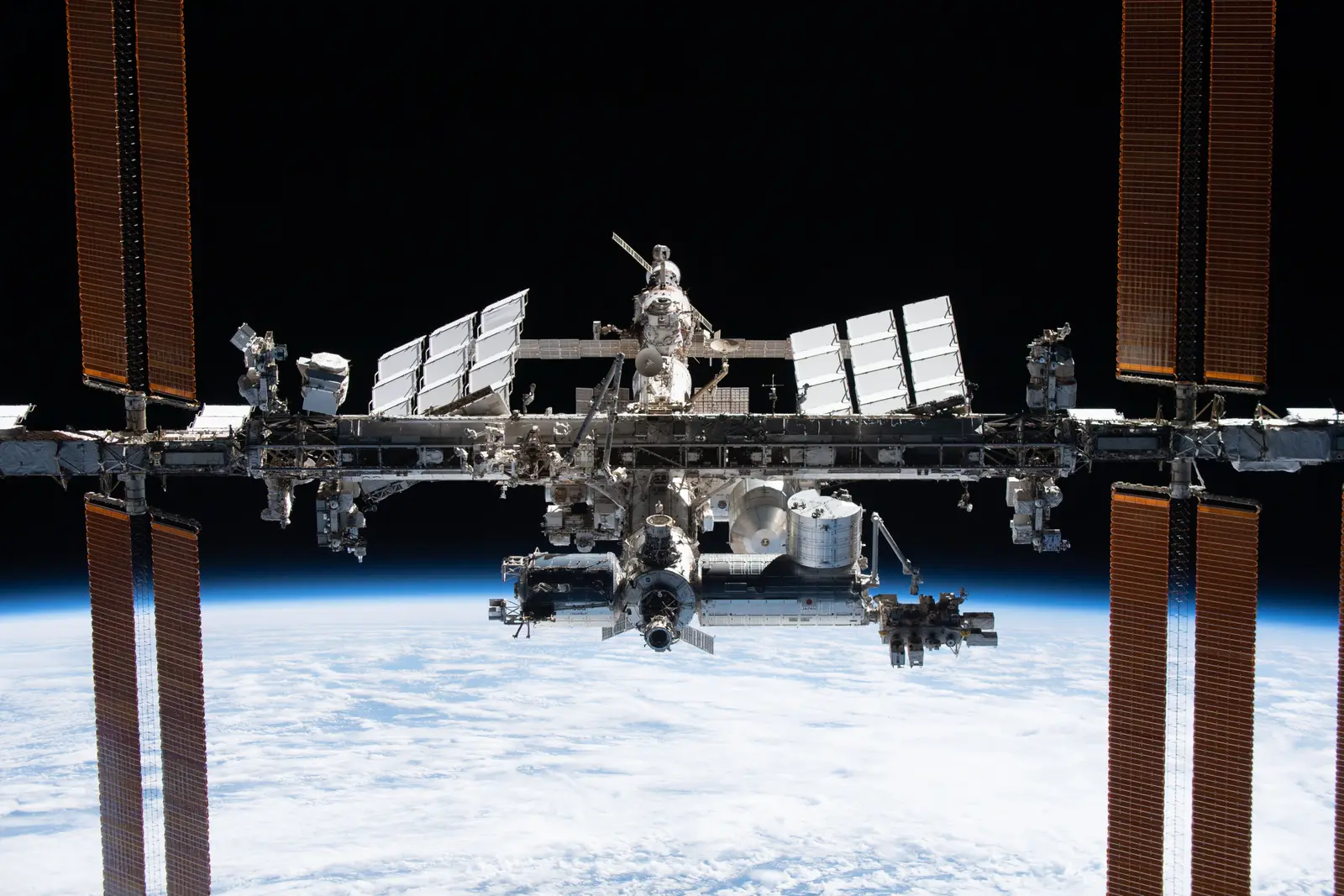
A space station the size of a football field, 400 km up, orbiting at 28,000 km/h — one lap every 90 minutes. The crew sees 16 sunrises a day.
NASA
Catch it in the sky
How to see it tonight
It is a bright, steady moving star, and it is visible from cities. Planes blink; the ISS does not.
SkyLumi computes its path from live orbital data at your location. This page cannot print a pass time over your house — that number is different every night, and only the app (or an alert service) knows it.
For email alerts, NASA’s Spot the Station can notify you. SkyLumi does not send those.
What SkyLumi does
Tap Aim and hold the phone to the sky; the map follows your hand. Open AR and the sky is drawn over the camera, lined up with what is actually above you — including the ISS and Starlink, computed live from real orbital data.
Search jumps to a name. Night Vision is a deep red display that keeps your eyes dark-adapted. No account, no ads.
The core sky — stars, constellations, planets — works offline. Live satellites and high-resolution survey imagery need a connection.
A few things to know.
Can I see the ISS from a city?
Yes. ISS passes are city-visible: a bright, steady moving star. SkyLumi shows you where to look; it does not invent a clock time on this page.
How do I tell it from a plane?
Planes blink. The ISS is a steady light, moving in a smooth line.
When is the next pass over my house?
Not on this page. SkyLumi computes the ISS from live orbits at your location once you open the sky. A static article cannot.
Will SkyLumi email me when it is coming?
No. NASA’s Spot the Station does that. SkyLumi shows the station on the map; it does not send alerts.