Watch it for a minute
A light crossing a large part of the sky in a few minutes is likely to be a satellite or aircraft. A regular blink, especially with red or green lights, points toward an aircraft. Satellites usually look steadier, although rotating ones can brighten and fade. The International Space Station can become strikingly bright and then disappear into Earth’s shadow.
A star or planet barely changes position against nearby stars during that minute. Over hours, both travel across the sky as Earth rotates. “It moved overnight” does not distinguish the two.
Four clues you can use immediately
| What you notice | A useful possibility | What to check |
|---|---|---|
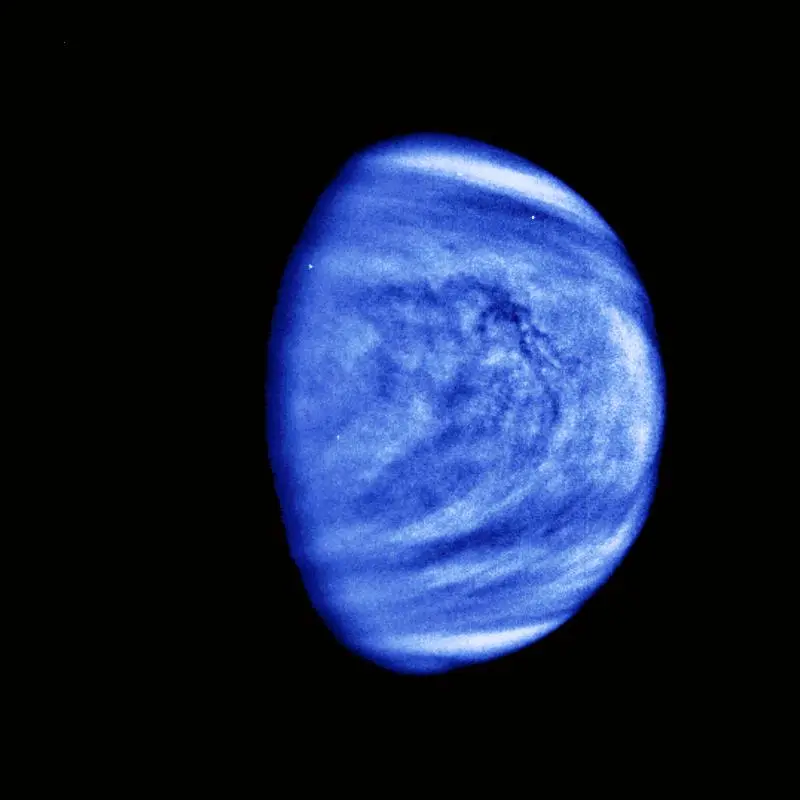
| Very bright, toward sunset or sunrise | Venus; sometimes Jupiter | Date and direction. Venus stays relatively close to the Sun in our sky. |
| Bright and fairly steady, among familiar stars | A planet | Compare the position with a map set to your location and time. |
| Flashing several colors near the horizon | A bright star, often Sirius when it is in season | Atmospheric turbulence can make a steady star flicker dramatically. |
| Gliding across the sky over minutes | Satellite or aircraft | Track movement and blinking; use current satellite positions. |
These are clues, not an identification certificate. Planets can twinkle when low down, aircraft can approach almost head-on, and not every satellite is in every app’s catalog.
What if it is right beside the Moon?
The Moon passes through the same broad belt of sky as the planets, so close-looking pairings are common. They are alignments from our viewpoint. The Moon is much closer than the bright planet or star beside it.
The Moon also moves noticeably against the stars from one night to the next. Yesterday’s photograph is not a reliable identification for tonight. Record your city or approximate location, the date, the local time and which direction you faced. That is enough to make the question answerable.
Use the planet checker to see which planets are above your horizon. If none matches, compare the surrounding star pattern in SkyLumi.
Why stars twinkle and planets usually look steadier
Starlight reaches us from something so far away that it acts almost like a single point. Moving pockets of air bend that light by slightly different amounts. The brightness and color reaching your eye keep changing. Astronomers call this scintillation.
A planet presents a tiny disk. Light from different parts of that disk takes slightly different paths through the air, and some of the fluctuations average out. The distinction weakens close to the horizon, where the light crosses more atmosphere. “Steady means planet” is a useful first guess, not a rule without exceptions.
Find the name, then put the phone down
Open SkyLumi, set the correct location and time, and use Aim to line up the map with the sky. Check two nearby stars as well as the bright target; that helps catch a compass offset. You can also move the map by hand if the sensor alignment is off.
Once the name fits, look back at the real sky. If it is Jupiter, you are seeing sunlight reflected by a world large enough to contain more than a thousand Earth volumes. If it is Sirius, the light has spent roughly nine years getting here. The map supplies a name; the useful part is knowing what that little point actually is.
Sources and image credits
- NASA: identifying bright and moving objects. Steady planets, twinkling stars, satellite and aircraft clues; the dated event listings are not used as tonight’s sky.
- NASA: skywatching guide. Unaided-eye planets and observing basics.
- NASA: Jupiter facts. Jupiter’s size and reflected sunlight.
Written for beginners from the sources above. How we research and correct the library. Found an error? Tell us.